


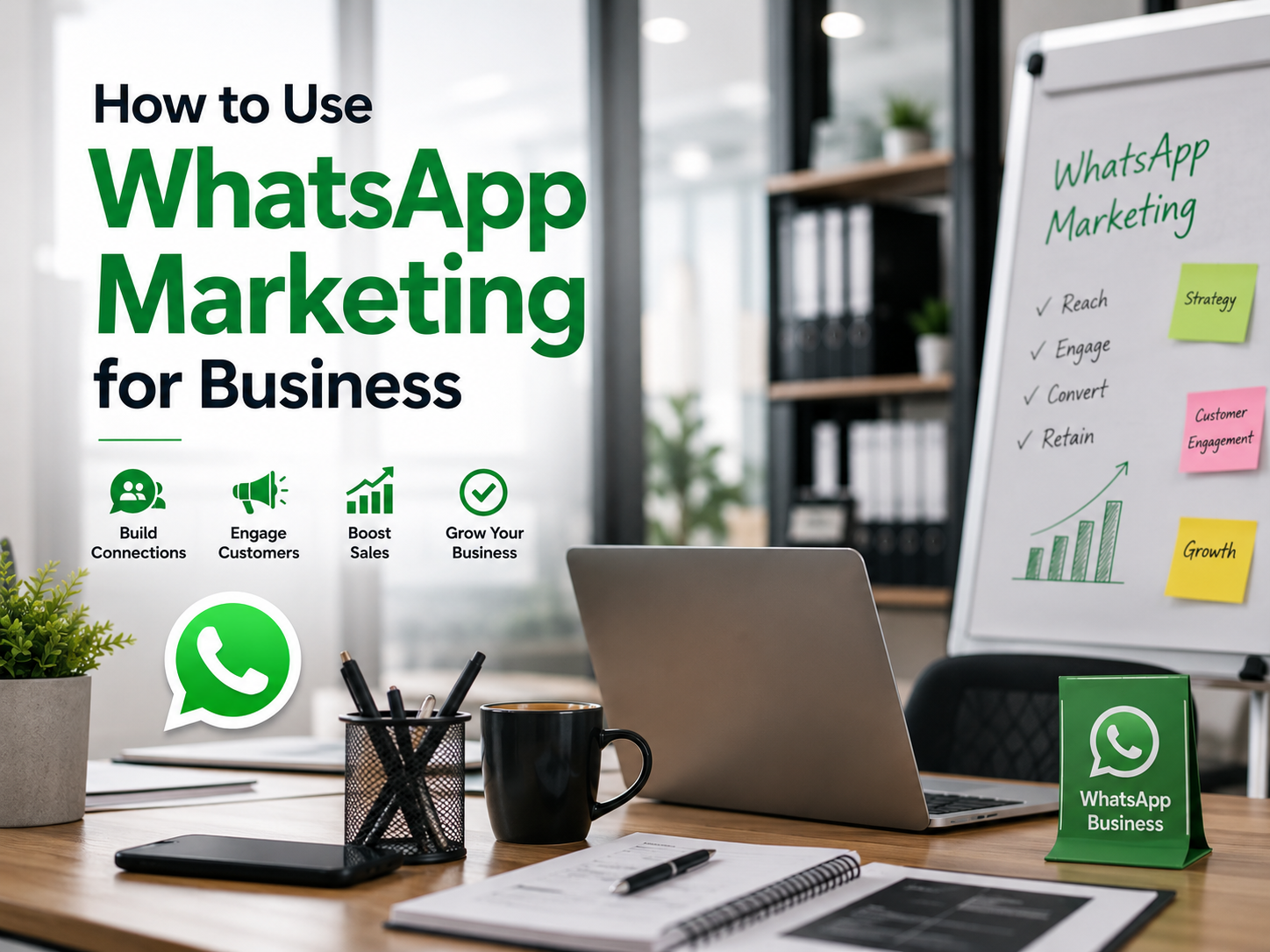
How to Use WhatsApp Marketing for Business
In today’s digital world, customers do not want to wait for replies, search through long websites, or fill out complicated forms. They want quick answers, personal communication, and simple buying options. This is exactly why WhatsApp marketing has become one of the most powerful ways for businesses to connect with customers. Whether you run a small shop, ecommerce store, restaurant, real estate business, education institute, service company, or startup, WhatsApp marketing for business can help you generate leads, improve customer support, increase sales, and build long-term relationships.
At Xsoln Technologies, we understand that business growth depends on communication. If your customers are already using WhatsApp every day, your business should also be available there. A smart WhatsApp marketing strategy allows you to reach customers directly, share offers, answer questions, send updates, recover lost sales, and create a smooth buying journey.
The best part about WhatsApp business marketing is that it feels personal. Unlike emails that often stay unread or social media posts that disappear in crowded feeds, WhatsApp messages usually get noticed quickly. This makes WhatsApp message marketing useful for businesses that want faster replies, better trust, and higher conversions.
What Is WhatsApp Marketing?
WhatsApp marketing means using WhatsApp to promote products, communicate with customers, provide support, send updates, collect leads, and increase sales. It can be done through the WhatsApp Business app, WhatsApp Business API, WhatsApp chatbot, WhatsApp automation, and different WhatsApp marketing tools.
Many people think WhatsApp is only for chatting, but for businesses, it is much more than that. It can work as a sales channel, support system, lead generation tool, product catalog, customer retention platform, and even a mini ecommerce store. With the right WhatsApp marketing platform, businesses can manage conversations, automate replies, send campaigns, and track performance.
If you are wondering how to use WhatsApp marketing, the first step is to understand your customer journey. A customer may discover your brand on Google, social media, ads, or your website. When they click a WhatsApp click to chat link, scan a QR code, or tap a WhatsApp CTA button, they can instantly start a conversation with your business. This direct connection is what makes WhatsApp direct marketing so effective.
Why WhatsApp Marketing Is Important for Business
The biggest reason businesses use WhatsApp marketing for business is simple: customers are already active on WhatsApp. Instead of asking people to download another app or visit another platform, you meet them where they already spend time. This improves WhatsApp customer communication and makes the buying process easier.
The benefits of WhatsApp marketing include faster response time, higher message visibility, better customer trust, simple product sharing, easy follow-ups, and stronger customer relationships. Compared to traditional advertising, WhatsApp advertising feels more direct and personal. It helps businesses talk to customers instead of only showing them ads.
Another major advantage is customer engagement. With WhatsApp customer engagement, you can send product updates, appointment reminders, order confirmations, payment links, festival offers, feedback requests, and support messages. This creates a better experience and improves WhatsApp customer retention.
For small companies, WhatsApp marketing for small business is especially useful because it does not require a huge budget. A local business can start with the WhatsApp Business app, create a profile, add a catalog, set automated greetings, and begin communicating with customers professionally.
How to Set Up WhatsApp for Business
To begin WhatsApp Business for small business, download the WhatsApp Business app and create a professional business profile. Add your business name, logo, description, address, working hours, website, email, and product details. These basic WhatsApp Business features help customers understand your business quickly.
The WhatsApp Business catalog is one of the most useful tools for product-based businesses. You can add product images, prices, descriptions, and links. This turns WhatsApp into a simple shopping experience. For ecommerce and retail brands, WhatsApp product catalog, WhatsApp commerce, and WhatsApp shopping can help customers browse and place orders without leaving the chat.
If your business receives many messages every day, you should consider the WhatsApp Business API. Unlike the normal app, the API is designed for growing businesses that need automation, multiple agents, CRM connection, and large-scale campaigns. With WhatsApp API marketing, you can connect WhatsApp with your sales system, support desk, or CRM. This is where WhatsApp CRM integration becomes very powerful.
Building a WhatsApp Marketing Strategy
A successful WhatsApp marketing strategy starts with clear goals. Do you want more leads, more sales, better support, repeat customers, or stronger brand loyalty? Once your goal is clear, you can create the right WhatsApp marketing campaign.
For example, if your goal is WhatsApp lead generation, you can add a WhatsApp button on your website, landing page, Google Business Profile, Instagram bio, Facebook ads, and product pages. When users click the link, they can directly message your team. This is called WhatsApp link marketing, and it works well because it removes extra steps.
Your WhatsApp landing page should have a strong message and a clear reason for users to contact you. You can offer a free consultation, discount coupon, product demo, price quote, or downloadable guide. This improves WhatsApp lead capture and helps your team start conversations with interested customers.
A strong WhatsApp sales funnel usually begins with awareness, moves to conversation, then product recommendation, follow-up, payment, and customer retention. When planned correctly, your WhatsApp marketing funnel can convert casual visitors into paying customers.
WhatsApp Marketing Ideas for Business
There are many practical WhatsApp marketing ideas that businesses can use. You can send new product updates, limited-time offers, order confirmations, appointment reminders, event invitations, customer feedback messages, loyalty rewards, referral offers, and festival promotions. These WhatsApp promotion ideas work best when they are relevant and useful.
For ecommerce brands, WhatsApp marketing for ecommerce can include abandoned cart recovery, product recommendations, order tracking, and post-purchase support. A simple WhatsApp abandoned cart message can remind customers about products they left behind and encourage them to complete the purchase.
For retail stores, WhatsApp marketing for retail business can include daily offers, new arrivals, seasonal discounts, and customer loyalty updates. Restaurants can use WhatsApp marketing for restaurants for table bookings, menu sharing, food delivery updates, and festival offers. Real estate companies can use WhatsApp marketing for real estate to share property details, site visit schedules, brochures, and follow-up messages.
Education businesses can use WhatsApp marketing for education business for admission enquiries, course details, class reminders, fee updates, and student support. Service providers can use WhatsApp marketing for service business to book appointments, send quotations, share project updates, and provide after-service support.
WhatsApp Broadcast Marketing and Bulk Messaging
WhatsApp broadcast marketing allows businesses to send one message to many contacts at once. A WhatsApp broadcast message can be useful for offers, announcements, updates, and reminders. However, businesses must use this carefully. Sending too many unwanted messages can damage trust and may violate WhatsApp spam policy.
Many businesses search for WhatsApp bulk messaging, but bulk messaging should never mean spamming people. The right way is to send messages only to users who have given permission. This is called WhatsApp consent marketing. A strong WhatsApp opt-in strategy protects your brand and improves message quality.
Your customers should also have an easy way to stop receiving messages. A simple WhatsApp opt out message such as “Reply STOP to unsubscribe” shows professionalism and builds trust. Following WhatsApp marketing compliance is important if you want long-term results.
WhatsApp Automation and Chatbots
As your business grows, replying manually to every customer becomes difficult. This is where WhatsApp automation helps. You can automate welcome messages, FAQs, order updates, appointment reminders, payment confirmations, and follow-ups.
A WhatsApp chatbot can answer common questions instantly. For example, if a customer asks about pricing, working hours, product availability, or delivery status, the chatbot can respond immediately. This improves WhatsApp response rate and reduces pressure on your team.
However, automation should still feel human. The best WhatsApp conversational marketing combines automation with real support. Let the chatbot handle simple questions, but allow customers to speak with a real person when needed. This improves WhatsApp customer support and creates a better experience.
WhatsApp Message Templates That Work
Good messaging is the heart of WhatsApp business communication. Your messages should be short, clear, friendly, and useful. A WhatsApp welcome message should greet the customer and tell them how you can help. A WhatsApp follow up message should remind the customer politely without sounding pushy. A WhatsApp offer message should clearly explain the benefit and deadline.
For seasonal campaigns, a WhatsApp festival offer message can work very well in India. Since WhatsApp marketing India is growing fast, businesses can use festivals like Diwali, Holi, Eid, Christmas, New Year, and local events to connect with customers. But the message should feel personal, not copied.
WhatsApp promotional messages should focus on value. Instead of only saying “Buy now,” explain why the offer matters. A strong message includes the product, benefit, price or discount, deadline, and clear call to action.
WhatsApp Marketing for Sales and Lead Generation
A smart WhatsApp sales strategy can increase conversions because customers can ask questions before buying. Many people do not purchase immediately because they have doubts. WhatsApp removes that gap by allowing direct conversation.
For WhatsApp lead generation, businesses can use website buttons, social media links, QR codes, paid ads, landing pages, and offline posters. WhatsApp QR code marketing is especially useful for shops, restaurants, events, clinics, and local businesses. Customers can scan the QR code and start chatting instantly.
Once a lead enters your system, your team should respond quickly. Speed matters. A high WhatsApp open rate is useful only when your reply and offer are strong. Track your WhatsApp conversion rate, response time, and sales results to understand your WhatsApp marketing ROI.
WhatsApp Retargeting and Customer Retention
Not every customer buys on the first interaction. This is why WhatsApp retargeting and WhatsApp remarketing are important. You can follow up with users who asked for pricing, viewed a product, abandoned a cart, or downloaded a brochure.
For existing customers, WhatsApp customer retention can be improved through loyalty offers, renewal reminders, service updates, and personalized recommendations. A WhatsApp loyalty program can reward repeat customers with discounts, early access, or special deals.
WhatsApp referral marketing is also powerful. Happy customers can refer friends and family if you give them a simple reason to share. A short referral message with a reward can bring new leads at a low cost.
WhatsApp Groups, Communities, and Status Marketing
WhatsApp group marketing can work when you have a focused audience, such as students, local buyers, premium customers, or community members. But groups should not be used for random promotion. People stay in groups only when they receive value.
WhatsApp community marketing is useful for brands that want to build long-term engagement. You can share updates, learning content, offers, and announcements with a specific audience.
WhatsApp status marketing is another simple but effective method. You can use WhatsApp status promotion to share offers, testimonials, product launches, behind-the-scenes content, and customer reviews. Since status updates feel natural, they can increase interest without being too aggressive.
Best Practices for WhatsApp Marketing
The most important WhatsApp marketing best practices are permission, personalization, timing, clarity, and consistency. Always get customer consent before sending messages. Personalize your communication whenever possible. Send messages at the right time. Keep your content simple. Avoid sending too many promotions.
Use WhatsApp Business tips such as quick replies, labels, greeting messages, away messages, and catalog updates. These small features can save time and improve professionalism.
Businesses should also focus on trust. WhatsApp business verification and WhatsApp green tick verification can improve credibility for eligible brands. A verified business profile helps customers feel more confident when chatting with your company.
WhatsApp Marketing Tools and Software
To manage campaigns professionally, businesses can use WhatsApp marketing software, WhatsApp marketing tools, and a reliable WhatsApp marketing platform. The best WhatsApp marketing tools help with automation, chatbot setup, CRM integration, campaign management, analytics, team inbox, and message templates.
For growing businesses, WhatsApp website integration is very important. Add WhatsApp buttons to your homepage, service pages, product pages, blogs, and contact page. This makes it easier for visitors to contact you instantly.
If you are serious about growth, working with a WhatsApp marketing agency like Xsoln Technologies can save time and improve results. A professional team can help you create campaigns, set up automation, integrate CRM, design funnels, and improve conversions.
WhatsApp Marketing Examples and Case Study Approach
Simple WhatsApp marketing examples include sending a welcome message after enquiry, sharing a product catalog with a customer, sending a reminder before an appointment, recovering an abandoned cart, or offering a discount to repeat buyers.
A practical WhatsApp marketing case study could look like this: a local business adds a WhatsApp button to its website and runs a small ad campaign. Visitors click the button, ask questions, receive quick replies, and get product recommendations. The business follows up with interested leads and sends offers to existing customers. Over time, the business gets more enquiries, better engagement, and higher sales.
This is the real power of WhatsApp marketing for local business, WhatsApp marketing for startups, WhatsApp marketing for B2B, and WhatsApp marketing for B2C. It works because it creates direct, fast, and personal communication.
Final Thoughts
If you want to grow your business, improve customer communication, and increase sales, WhatsApp marketing is no longer optional. It is one of the easiest and most effective ways to connect with customers in real time. From WhatsApp Business app setup to WhatsApp Business API, from WhatsApp campaign ideas to WhatsApp order booking, from WhatsApp payment marketing to customer support, every part of your business can become faster and more customer-friendly.
The key is to use WhatsApp with strategy, not spam. Build trust, take permission, send useful messages, automate smartly, and keep the conversation human. With the right planning and execution, WhatsApp marketing for business can become one of your strongest growth channels.
Xsoln Technologies helps businesses create result-driven digital marketing systems, including WhatsApp campaigns, automation, website integration, lead generation, and customer engagement solutions. If you want to use WhatsApp professionally for your business, Xsoln Technologies can help you build the right strategy and turn conversations into customers.
 vidIQ
vidIQ






Leave a comments: