


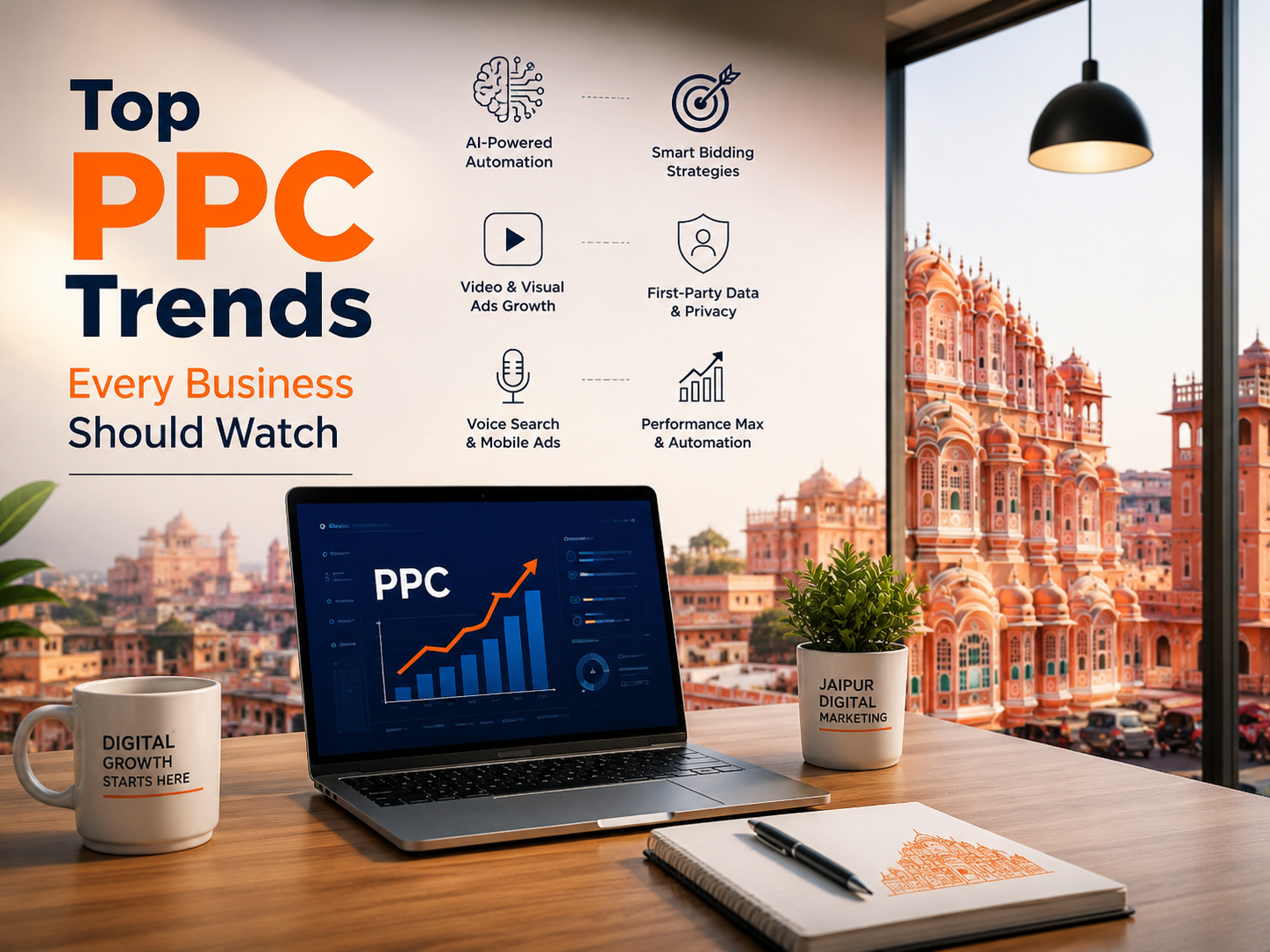
Top PPC Trends Every Business Should Watch in 2026
The digital advertising world is changing faster than ever before. Businesses that once relied on simple keyword bidding and standard text ads are now entering an era powered by automation, artificial intelligence, audience behaviour tracking, and predictive analytics. The way brands approach paid advertising today is completely different from what it was even two years ago. That is why understanding the PPC trends shaping 2026 has become essential for every business that wants to stay competitive online.
Whether you are a startup, a local business, or a growing enterprise, paid advertising is no longer optional. It is one of the fastest ways to drive traffic, generate leads, increase conversions, and build brand visibility. However, the strategies that worked previously may no longer deliver the same results today. Businesses now need smarter campaigns, advanced targeting, and AI-powered tools to compete in an increasingly crowded digital space.
At present, businesses are already adapting to the latest PPC trends to create better-performing campaigns that generate measurable ROI. The future of advertising belongs to businesses that understand how PPC is changing in 2026 and how to use these changes to their advantage.
One of the biggest shifts in the industry is the rise of automation and artificial intelligence. The role of AI in digital marketing is becoming impossible to ignore. Google Ads has heavily invested in machine learning systems that can automatically optimise campaigns based on user behaviour, intent signals, and conversion probability. These developments are redefining the future of PPC and changing how businesses approach online advertising.
The growth of AI in PPC is not simply about saving time. It is about making advertising smarter. AI can now analyse massive amounts of user data, predict buyer intent, adjust bids in real time, and optimise campaigns faster than any manual process ever could. Businesses that understand AI-powered advertising are gaining a significant advantage over competitors still relying on outdated manual methods.
One of the most noticeable Google Ads trends in 2026 is the widespread use of smart bidding strategies. Instead of manually adjusting bids for keywords, advertisers are now using automated bidding models powered by machine learning. These systems analyse hundreds of data signals, including device type, browsing behaviour, time of day, location, and audience intent to maximise conversions.
Businesses are also increasingly relying on Performance Max campaigns to improve campaign performance across Google’s entire advertising ecosystem. This includes Search, Display, YouTube, Gmail, and Discover. These campaigns use AI to automatically identify the best placements and audiences for advertisers. For companies looking to improve ROI while reducing manual management, Performance Max has become one of the most important PPC marketing trends in recent years.
Another major shift in the paid search trends landscape is the evolution of keyword targeting. Traditional keyword match types are becoming less important as Google focuses more on user intent. Search engines are now better at understanding what users actually mean rather than matching exact keywords. This means businesses must focus more on creating relevant ad copy, strong landing pages, and audience-focused campaigns instead of relying only on keyword density.
The increasing use of responsive search ads is another example of how automation is changing paid advertising. These ads allow advertisers to provide multiple headlines and descriptions while Google automatically tests different combinations to find the highest-performing versions. Businesses that use responsive search ads effectively are seeing higher click-through rates and improved conversion performance.
As automation grows, proper data tracking becomes even more important. One of the key Google Ads optimisation tips for 2026 is improving conversion tracking Google Ads systems. Without accurate conversion data, AI tools cannot optimise campaigns effectively. Businesses that fail to implement proper tracking systems often waste advertising budgets and lose valuable insights about customer behaviour.
Privacy updates are also reshaping the advertising industry. The decline of third-party cookies has forced advertisers to rethink audience targeting strategies. This has accelerated the growth of first-party data marketing and privacy-focused advertising. Businesses now need to build stronger relationships with their audiences while collecting valuable customer data ethically and transparently.
The move toward cookie-less advertising is one of the most important digital advertising trends businesses should understand today. Companies that rely heavily on third-party audience data are being forced to adapt quickly. This has increased the importance of customer databases, email marketing integration, loyalty programs, and CRM-driven advertising strategies.
At the same time, audience targeting trends are becoming more advanced. Platforms can now analyse customer intent, behavioural patterns, and browsing habits to create highly personalised advertising experiences. This has made customer intent targeting a critical part of modern PPC campaigns. Businesses that understand user behaviour are achieving better engagement and higher conversion rates.
The rise of behavioural targeting ads is also transforming how businesses communicate with potential customers. Instead of showing the same generic ad to every user, advertisers can now create personalised campaigns based on interests, purchase history, browsing activity, and demographic signals. This level of personalisation is becoming essential in competitive industries.
One area seeing rapid growth is remarketing trends and advanced retargeting strategies. Businesses are increasingly targeting users who previously interacted with their websites, videos, or ads. These campaigns help improve conversions because they focus on audiences already familiar with the brand. Modern remarketing campaigns are becoming more dynamic, personalised, and behaviour-driven.
The growth of video advertising is another major shift in the online advertising trends space. Platforms like YouTube, TikTok, Instagram, and Facebook are dominating user attention, especially among mobile users. This has created enormous opportunities for brands investing in video ad trends and short-form video advertising.
Among the fastest-growing social media advertising trends is the use of vertical mobile video ads designed specifically for smartphones. Businesses are now creating short, engaging video content that captures user attention within seconds. This approach is especially effective for startups and small businesses looking to increase visibility quickly.
The rise of YouTube advertising trends has also changed how brands approach storytelling. Businesses are increasingly using educational videos, tutorials, product demos, and customer testimonials as part of their PPC campaigns. Video content builds trust faster than static ads and often delivers stronger engagement rates.
At the same time, TikTok ads trends continue to influence younger audiences through authentic, creative, and fast-paced content. Businesses that adapt to platform-specific content styles are achieving stronger campaign performance. The same applies to evolving Meta ads trends, where Facebook and Instagram continue to focus on AI-driven audience targeting and immersive ad experiences.
Another major development shaping the future of paid advertising is voice search. As smart devices and voice assistants become more common, advertisers must optimise campaigns for conversational search behaviour. Voice search advertising is becoming more important because users now search differently when speaking compared to typing.
This shift is influencing voice search PPC optimisation strategies. Businesses are increasingly targeting longer conversational keywords and question-based search terms. Brands that adapt early to voice search behaviour will likely gain a strong competitive advantage in the coming years.
Mobile usage is also driving major changes in PPC strategy. One of the biggest mobile PPC trends today is the focus on fast-loading, mobile-first experiences. Google continues prioritising mobile-friendly websites and mobile user experience in advertising performance metrics.
Businesses investing in mobile-first advertising are optimising landing pages, improving loading speeds, and designing ads specifically for smartphone users. Mobile optimisation is no longer optional because most online searches and ad interactions now happen on mobile devices.
The growth of click-to-call ads and location-based advertising is especially important for local businesses. These advertising formats help businesses connect with nearby customers ready to take immediate action. For companies focused on local lead generation, mobile targeting can significantly improve campaign results.
The evolution of AI has also changed campaign analysis and performance optimisation. Businesses are now using advanced PPC analytics tools to understand user behaviour, measure conversions, and identify growth opportunities. Accurate reporting is becoming one of the most valuable assets in paid advertising.
Modern advertisers are focusing heavily on tracking PPC performance to improve decision-making. Metrics such as conversion rates, cost per acquisition, customer lifetime value, and return on ad spend are becoming more important than simple clicks or impressions.
Businesses that understand PPC conversion optimisation are investing more time into landing page improvements, ad testing, and user experience enhancements. Even small changes in landing page design can dramatically improve campaign performance.
One of the best PPC ROI strategies in 2026 is combining strong ad targeting with optimised landing pages. Businesses that align their messaging across ads and landing pages are achieving significantly higher conversion rates. This approach is becoming essential for creating high-converting PPC campaigns.
Another major factor driving success is audience segmentation. Advanced PPC audience segmentation allows businesses to create highly targeted campaigns for different customer groups. Instead of running one generic campaign, advertisers are building customised campaigns based on user interests, demographics, buying behaviour, and engagement history.
This level of targeting helps businesses reduce wasted ad spend while improving lead quality. It also supports stronger customer acquisition through PPC by delivering more relevant advertising experiences.
For small businesses and startups, PPC remains one of the most effective ways to compete online. Understanding PPC trends for small businesses can help brands generate leads even with limited budgets. Smart targeting, local campaigns, remarketing, and mobile optimisation are becoming key strategies for smaller companies.
The growth of paid ads for local businesses is particularly important as consumers increasingly search for nearby services on mobile devices. Businesses using local targeting and mobile-focused campaigns are seeing stronger engagement and better conversion performance.
As competition increases, companies also need to focus on Google Ads best practices in 2026. This includes better audience targeting, improved ad relevance, stronger creative content, automated bidding, and continuous testing. Businesses that regularly optimise campaigns are far more likely to succeed in modern PPC advertising.
Many advertisers are also exploring new PPC automation tools to improve efficiency. These tools can automate reporting, bid adjustments, keyword analysis, audience targeting, and campaign management. Automation allows marketers to focus more on strategy and creative optimisation instead of repetitive manual tasks.
The role of predictive advertising analytics is also growing rapidly. AI tools can now predict customer behaviour patterns and recommend campaign adjustments before performance issues occur. This proactive approach is helping businesses improve ROI and reduce wasted spending.
Understanding how AI affects PPC is critical for businesses preparing for the future. Artificial intelligence is no longer a futuristic concept. It is already shaping campaign management, targeting, bidding, audience segmentation, and ad optimisation across every major advertising platform.
Businesses asking why PPC matters in 2026 should understand that paid advertising continues to deliver some of the fastest and most measurable marketing results available today. Organic growth strategies remain valuable, but PPC provides immediate visibility, scalable traffic, and targeted lead generation opportunities.
For companies wondering how to improve PPC campaigns, the answer lies in adapting to modern trends. Businesses need better audience targeting, stronger creative content, improved landing pages, AI-driven automation, and advanced analytics to remain competitive.
The importance of PPC marketing continues to grow because customer behaviour is evolving rapidly. Consumers now expect personalised experiences, fast-loading mobile content, relevant ads, and seamless online interactions. Businesses that fail to adapt risk losing visibility to competitors investing in smarter advertising strategies.
The benefits of PPC advertising remain incredibly powerful for businesses focused on growth. PPC delivers measurable results, faster lead generation, improved targeting, scalable traffic, and greater brand exposure. When managed correctly, PPC campaigns can become one of the highest-performing digital marketing channels for almost any business.
For beginners entering paid advertising, understanding the beginner guide to PPC advertising starts with focusing on audience intent, campaign goals, and conversion tracking. Successful PPC campaigns are not just about clicks. They are about attracting the right customers and converting traffic into revenue.
Modern business PPC strategy requires a balance between automation and human creativity. AI can optimise campaigns, but businesses still need compelling messaging, strategic planning, and strong customer understanding to achieve long-term success.
The newest PPC marketing techniques now combine machine learning, audience insights, automation, video content, and mobile optimisation into a single integrated strategy. Businesses that embrace these changes are positioning themselves for sustainable growth in the digital advertising landscape.
As the industry continues evolving, one thing remains clear. The businesses that succeed in 2026 will be the ones that adapt early, test continuously, and invest in smarter advertising strategies. The world of PPC is changing rapidly, but for brands willing to evolve, the opportunities are bigger than ever before.
Companies working with experienced digital marketing partners like [partner name] can stay ahead of these changes while building campaigns designed for long-term business growth. From AI-powered campaign management to advanced targeting and conversion optimisation, modern PPC success depends on understanding the trends shaping the future of digital advertising.






Leave a comments: